Repiping Services in Fremont, CA
When a pipe has failed once too often, patching it again stops making sense. We repipe homes in Fremont, CA in PEX or copper, working room by room so you're not without water for days at a time.
Book this service
Thanks — we've got your request and will call you back shortly. If it can't wait, call us on (510) 766-7891 .
PEX or Copper — Which Should You Choose?
PEX is flexible, resists freezing better, and needs far fewer joints than copper, which means fewer places for a leak to start. It costs less installed and is a strong fit for the tight crawl spaces and wall cavities common in Fremont's older housing stock.
Copper costs more but has a long track record, holds up well where pipe is exposed to sunlight or physical wear, and some homeowners simply prefer it for resale. Both meet California plumbing code. We'll lay out the real trade-offs for your specific house rather than push whichever is easier for us to install.
How Invasive Is a Repipe, Really?
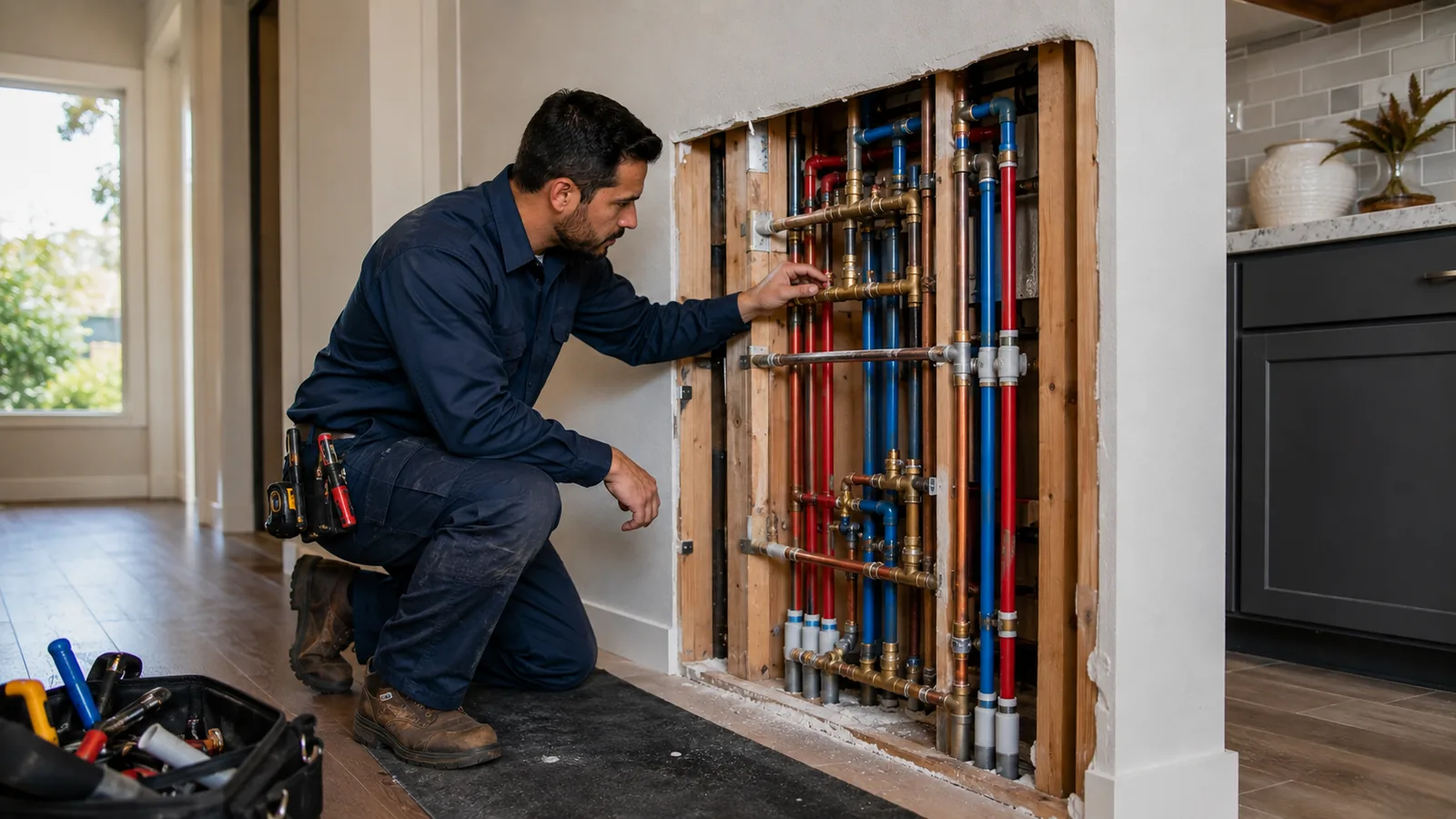
Most repipes do require opening some drywall to route new lines to each fixture, but a well-planned job targets specific access points rather than tearing out entire walls. Where a wall cavity or attic run gives us a clean path, we use it instead of cutting.
We patch every opening before we leave — mudded and taped, ready for your painter — and a typical single-family home is done in two to four days rather than the week or more a poorly sequenced job can take. Worth saying: a repipe replaces supply lines only. If the trouble is waste water coming back up, that is a drain problem, and a far smaller job.
Repiping, Without the Sales Pitch
Cost depends mainly on square footage, number of fixtures, and how accessible the existing pipe is — slab homes cost more to repipe than homes with an open crawl space, because reaching the lines means more cutting and patching. PEX typically costs less installed than copper because it needs fewer fittings and less labor time. Get a written price after a free on-site assessment rather than a phone estimate, since access is what really drives the number.
Yes, in most cases. A well-planned repipe targets specific access points — following existing wall cavities, attic runs, or crawl space access — rather than opening every wall in the house. Some drywall work is usually unavoidable to reach fixtures, but we patch and finish every opening before we leave, ready for paint.
PEX is flexible, needs fewer joints, resists freezing better, and costs less installed — a strong fit for most residential repipes. Copper costs more but has a longer track record and holds up better where the pipe stays exposed. Both are code-approved in California; the right choice depends on your budget and how the pipe will be used, not on which is objectively superior.
A typical single-family home is repiped in two to four days when the job is planned properly and the crew isn't discovering the route as they go. Larger homes, slab construction, or homes with limited attic/crawl access can take longer. We confirm a realistic timeline after seeing the house, not before.
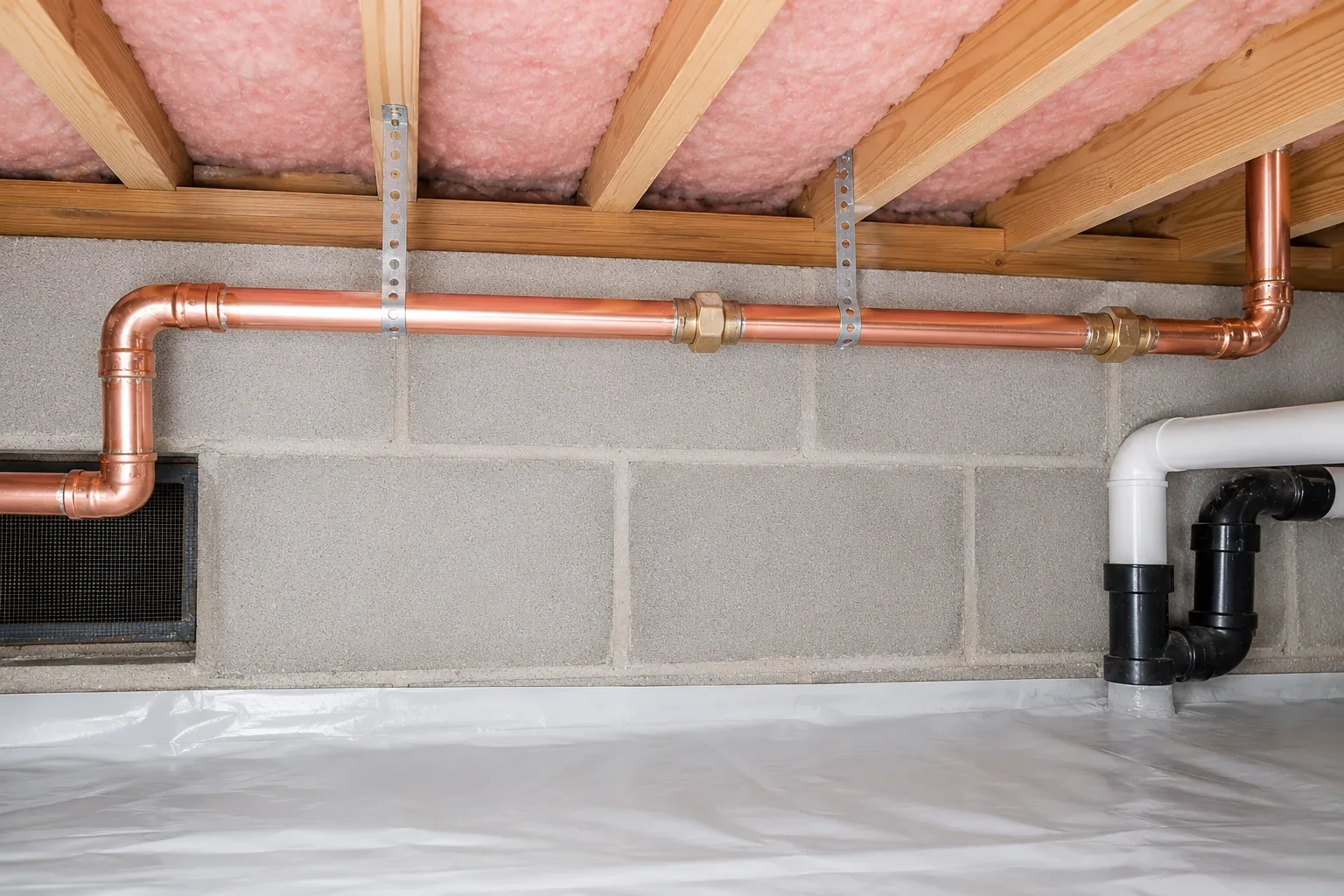
Planned before it starts
Mapped on Paper Before a Wall Comes Open
A repipe is disruptive by nature, so we plan it before we start rather than opening walls as we go. We walk the whole house first, map every fixture, and agree the route and the price in writing — including which walls or ceilings need to be opened and closed back up. If a line has already let go, call the 24/7 emergency line first; we stop the water before anyone discusses a repipe.
- Free on-site assessment of your existing pipe
- PEX or copper, priced and explained side by side
- Work scheduled room by room to limit water downtime
- Drywall patched and ready for paint when we're done
Every repipe in Fremont, CA is permitted, pressure tested, and guaranteed.
What Drives the Price of a Whole-Home Repipe
Cost scales with square footage, the number of fixtures, and how accessible the existing pipe is — a single-story home with an open crawl space costs less to repipe than a two-story home on a slab, because slab work means cutting and patching concrete or routing new lines through the attic instead.
PEX is usually the lower-cost option since it installs faster and needs fewer fittings; copper costs more in materials and labor but is the sturdier choice where pipe will stay exposed. We give you both prices in writing after seeing the house, not a phone estimate — the same rule we apply to every job we quote.
When Patching Has Run Its Course
- Repeated pinhole leaks in different spots on the same line
- Low water pressure throughout the house, not just one fixture
- Discolored or rusty water, especially right after the water's been off
- Visible corrosion or green staining on copper pipe
- A home still running on its original galvanized supply lines
Room by room
How a Repipe Is Sequenced
Sequencing is what keeps a repipe to a few days and keeps water running in most of the house meanwhile.
Whole-House Walkthrough
We map every fixture and settle the route before quoting — not while the drywall is already open.
PEX and Copper, Priced
Both materials costed side by side, with the real trade-offs for your specific house set out plainly.
Schedule by Room
Work is staged so you keep water in most of the house on most days, rather than losing all of it at once.
Install, Pressure Test, Inspect
New lines go in to California code, get pressure tested, and are signed off by the city inspector.
Patch and Hand Back
Openings are mudded and taped ready for paint, and the permit paperwork comes to you.
Considering a Repipe in Fremont?
Get a free on-site assessment and a written price for PEX or copper before you decide.
If the Trouble Is Somewhere Else
FAQs
Repiping questions, answered plainly
Cost, disruption, materials, and whether it is worth doing yet.